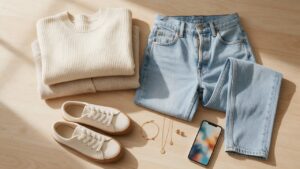
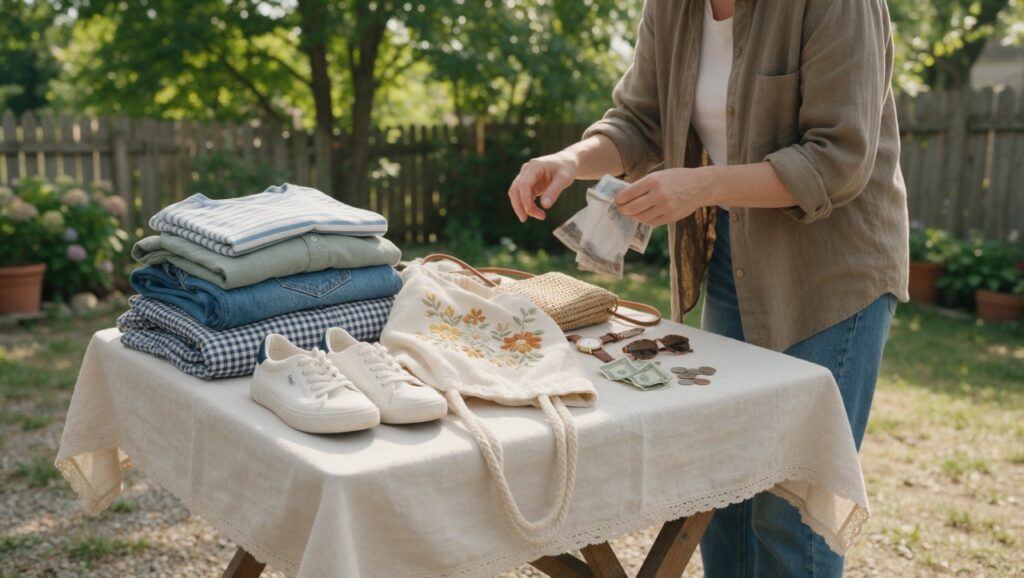
It is Saturday morning, you have brunch at noon and a casual dinner by seven, your favorite jeans are in the wash, and you have about thirty bucks left in your fun budget. That is a good setup for a challenge: build a whole weekend outfit on Shopee without going over $30.
This is not about buying the first cheap thing you see. It is about knowing where to look, how to compare, and which pieces give you the most wear for the least money. Prices differ by country and change with every campaign, so treat the dollar amounts below as rough targets, not promises.
Set a Realistic Piece Breakdown Before You Scroll
Before opening the app, decide what your outfit actually needs. For a weekend look, you probably want a top, a bottom, and one accessory. Shoes are tricky because decent pairs often eat up the whole budget, so it makes sense to work with shoes you already own. That leaves more room for clothes that show up in photos and get noticed.
A practical split for a $30 budget looks like this:
- Top: $8 to $10
- Bottom: $10 to $12
- Accessory: $3 to $5
- Shipping: $0 to $3, if you cannot hit free shipping
Even at the top of every range the total stays at $30, and at the bottom it leaves a small buffer. This is not a strict rule, but it keeps you from spending $20 on a cute top and then realizing you cannot afford pants. The biggest mistake people make is treating the budget as one big pool and then overspending on the first item they like. A simple breakdown makes the whole process faster.
Start With Search Terms That Filter Out the Noise
Shopee search works best when you are specific. Typing “top” will give you thousands of results, many of them irrelevant. Instead, search for the exact style you want. If you are going for a relaxed Saturday look, try “cotton oversized tee women,” “ribbed tank top,” or “linen shorts high waist.” These longer phrases bring up smaller shops that focus on basics, and their prices are usually lower than big fashion stores.
Another trick is to add material words. Searching “cotton” or “rayon” tends to surface fewer stiff polyester pieces that look good in photos but feel bad in real life, though you still need to confirm the fabric in the description. For bottoms, add the word “elastic” if you want comfort. For example, “elastic waist trousers women” often leads to casual pants that fit well without needing exact measurements.
Do not ignore the search suggestions that pop up as you type. They reflect what other shoppers are searching for, and they can lead you to popular styles that many sellers stock, which tends to keep prices competitive. Once you find a listing you like, scroll down to the “More from this shop” section or check related products. Sellers who make one good basic usually make several, and you can often bundle items from the same shop to save on shipping.
Read Listings Like a Skeptic, Not a Fan
When a listing has beautiful photos, it is easy to convince yourself the product will look the same on you. That is how you end up with a top that fits like a crop top or pants that feel like plastic. The listing details are there to protect you, so use them.
First, check the fabric. If the description says “cotton blend,” that is fine, but look for the percentage if the seller provides it. A 95% cotton and 5% spandex top will usually feel soft and have a little stretch. A 100% polyester shirt might look shiny and trap heat. For weekend wear, comfort matters more than a sharp look.
Second, look at the size chart. Do not rely on S, M, L labels because they vary wildly between sellers. Measure a top you already like and compare it to the listing’s chest and length numbers. This takes two minutes and saves you from waiting a week for something that does not fit.
Third, check the buyer photos if they exist. Real photos from customers show how the item looks in normal lighting and on normal bodies. If the reviews only have seller photos or no photos at all, be more careful. Look for repeated complaints about thin fabric, weird smells, or sizing problems. One bad review is not a dealbreaker, but three saying the same thing is a pattern.
How to Pick a Top That Looks More Expensive Than It Is
The top is usually the first thing people notice, so it should look intentional. On a small budget, the safest choices are solid colors, simple necklines, and small details that add shape. A plain white or black tee works, but a ribbed tank with a square neckline looks a little more put together for brunch.
Here are a few styles that tend to photograph well and hold up better than fussy pieces:
- Ribbed knit tops in cream, black, or muted earth tones
- Oversized cotton tees with a heavy, structured collar
- Button-up shirts in breathable rayon or cotton blends
- Sleeveless tops with a slight stretch and clean hem
Avoid tops with complicated straps, cheap lace trim, or printed graphics unless the print is simple. Those details often look flimsy in person and can make an outfit look cheaper. If you want a little interest, choose a top with a subtle texture like waffle knit or a small embroidered logo. Texture reads as quality even when the price is low.
When choosing a color, think about what you already own. If your bottoms are mostly dark, a light top creates contrast. If you wear a lot of neutral pants, a soft pastel or faded olive adds variety without clashing. The goal is to buy something you will wear more than once, not a statement piece that only works for one weekend.
Bottoms: The Piece Worth a Few Extra Dollars
If there is one place to stretch your budget a little, it is the bottom. A bad pair of shorts or pants can ruin the whole day. They pinch, ride up, or lose their shape after one wash. Spending a few dollars more on a well-reviewed pair is usually worth it.
For weekend outfits, elastic waist pants and pull-on shorts are the easiest to buy online because you do not need an exact waist measurement. Look for:
- High-waisted linen or cotton blend shorts with a drawstring
- Relaxed straight-leg pants with an elastic back waist
- Soft joggers that do not look too athletic
- Mid-length skirts with stretchy waistbands
Pay attention to the inseam length for shorts. Many cheap listings show models wearing shorts that hit mid-thigh, but the actual product might be much shorter. The product description usually lists the inseam in centimeters or inches. Compare that to a pair of shorts you already own. If the measurement is missing, ask the seller before buying. It is better to wait a few hours for a reply than to receive something you cannot wear outside.
For pants, check whether the fabric has any stretch. A 100% cotton pant without stretch can be comfortable if it is loose, but it may also feel tight when you sit. A blend with spandex or elastane gives you room to move. Weekend clothes should let you eat, walk, and sit without adjusting yourself every five minutes.
Accessories That Add Polish Without Adding Bulk
An accessory can make a simple outfit feel finished. On a tight budget, you do not need much. One small piece is enough. The best options are things you can wear again with many outfits.
Some reliable choices include:
- Thin chain necklaces with a small pendant
- Simple hoop earrings in silver or gold tone
- A canvas tote bag in a neutral color
- A baseball cap with no large logos
- Minimalist hair clips or a slim belt
When shopping for jewelry on Shopee, look for terms like “stainless steel” or “titanium” if you have sensitive skin. Avoid items described as “alloy” without more detail, because they can tarnish quickly or irritate your ears. For bags, check the dimensions. Some totes look large in photos but arrive small. Read the measurements and compare them to a bag you already use.
A hat is one of the easiest accessories to buy online because fit is forgiving. A simple cotton or twill cap with an adjustable strap works for most head sizes. If you want a more feminine look, a woven straw bag or a soft headband can add texture without costing much. Pick one accessory and let it be the only extra. Too many small add-ons can clutter the outfit and push you over budget.
Use Vouchers and Free Shipping Without Obsessing Over Them
Shopee regularly offers vouchers, coin discounts, and free shipping deals, but the exact offers change often and vary by country. Check the app on the day you plan to buy. Look at the voucher page and the checkout screen to see what applies to your cart. Some vouchers work only with certain shops or minimum spends, so read the conditions before relying on them.
A few general habits help you save without spending hours hunting:
- Add items to your cart first, then check which vouchers apply at checkout
- Look for shops that offer a small discount when you buy two or more items
- Check if paying through a specific method gives a small rebate
- Watch for free shipping promos on weekends or campaign days
Do not let a voucher push you into buying something you do not need. A $2 voucher is not a win if you spend $6 more to reach the minimum. Keep your original list in mind. If the voucher works with your planned items, great. If not, buy anyway if the price is already fair. The real savings come from choosing good pieces, not from stacking every possible discount.
Bundle from One Shop to Cut Shipping Costs
Shipping fees can quietly destroy a small budget. If you buy a top from one shop, pants from another, and an accessory from a third, you might pay three separate shipping charges. Even small fees add up fast.
One way around this is to find a shop that sells multiple pieces you like. Many small fashion sellers stock coordinating basics. If you find a good top, check the same shop for bottoms or accessories. Buying two or three items from one seller often unlocks a shipping discount or a small bundle voucher. It also means your items arrive together, which is nice when you are planning a weekend look.
If you cannot find everything in one shop, try to keep it to two shops at most. Compare the total cost including shipping, not just the item price. A $9 top with $2 shipping is the same as an $11 top with free shipping. Do the math before you tap buy.
Common Mistakes That Blow Up a Budget Outfit
Most bad budget outfits come from the same handful of mistakes. The first is ignoring fabric. A top that looks soft in photos might arrive feeling like a raincoat. Always read the material section.
The second mistake is chasing trends. A trendy piece with unusual cutouts or a loud print might be cheap, but it is hard to wear more than once. If you only have $30, every piece needs to work with what you already own.
The third mistake is forgetting about length. Tops that are too short, pants that are too long, sleeves that hit at a weird spot. These small fit problems make clothes look cheap even when they are not. Check the measurements and compare them to something you own.
The last mistake is buying in a hurry. When you see a flash sale or a countdown timer, it is easy to buy without thinking. Take five minutes to read the reviews and size chart. A good deal is only good if the item works for you.
Putting It Together: A Sample Search
Here is how a weekend outfit search might go, using made-up round prices. You open Shopee and search “ribbed knit tank top square neck.” You find a shop with a solid rating, a size chart that matches your measurements, and buyer photos that look normal. The price is $9. The same shop sells high-waisted cotton shorts with a drawstring for $12. You add both to your cart.
Then you search “minimalist chain necklace stainless steel.” You find a simple pendant necklace for $4 from a different shop. Say shipping for the first shop is free thanks to a minimum-spend offer, and shipping for the necklace is $1. Your total is around $26 ($9 + $12 + $4 + $1), leaving a small buffer for price changes or a voucher.
When the items arrive, the top fits well because you checked the chest measurement. The shorts sit at your waist the way you expected because you read the inseam length. The necklace is lightweight and does not irritate your skin. You wear the outfit with sneakers you already own, and it looks like you spent more than you did. That is the whole point.
Quick Weekend Outfit Checklist
Before you check out, run through this list. It keeps you focused and prevents regret purchases.
- Set a piece breakdown: top, bottom, one accessory, shipping
- Search with specific style and material words
- Check fabric composition and size chart for every clothing item
- Read buyer reviews and look at customer photos
- Compare total cost including shipping, not just item price
- Try to buy two or more items from the same shop
- Use vouchers only if they fit your existing cart
- Choose solid colors, simple textures, and comfortable waistbands
- Avoid trendy pieces you will not wear again
- Measure against clothes you already own and love