You know that feeling when your closet is full but you still stand there thinking you have nothing to wear? I hit that wall last year. I had a rack of trendy pieces, a pile of impulse buys from flash sales, and somehow the same three outfits on rotation every week. That was my cue to try a capsule wardrobe, and since I do almost all my shopping on Shopee, I decided to build the whole thing online. It took some trial and error, but it changed how I shop and how I feel getting dressed in the morning.
A capsule wardrobe does not have to be a minimalist experiment with beige everything. It just means owning fewer pieces that actually work together. The hard part online is resisting the noise: vouchers, live sellers, “last chance” tags, and endless scrolling. This guide is about how to do it without falling into those traps, using the tools you already have on your phone.
Start With a Real Outfit Audit, Not a Pinterest Board
Before you open the app, pull everything out of your closet. I mean everything. Try on the pieces you actually reach for and put the rest in a pile. You are not deciding what to buy yet. You are figuring out what your current wardrobe already tells you.
Take note of the colors, shapes, and fabrics that keep showing up in your “worn every week” pile. For me, it was high-waisted bottoms, boxy tees, and one good pair of flat sandals. I also noticed I never wore the puff-sleeve tops I kept buying because they looked cute on a mannequin. That audit became my filter. When I shopped online later, I could ask one simple question: does this match the pile I actually wear, or the pile I wish I were cool enough to wear?
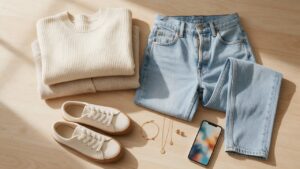
A common mistake is starting with a list of “capsule essentials” from a blog and buying all of it at once. That usually leads to a uniform that is not yours. Instead, write down three outfits you already love. Break them into individual pieces. Those are the anchors of your capsule. If your favorite outfit is a white button-down and straight-leg jeans, that tells you more than any generic list ever will.
Do this before any sale event. Shopee promotions are designed to make you browse, and browsing without a filter is how you end up with a zebra-print cardigan that matches nothing. Your audit is your shopping list.
Pick a Color Palette You Will Actually Maintain
Capsule wardrobes live and die by color. You do not need to stick to neutrals, but you do need a system. Pick two or three base colors for big pieces like pants, skirts, and jackets. Then pick a few accent colors for tops, bags, and small accessories. The goal is that any top can work with any bottom without a second thought.
For me, the base colors were black, off-white, and light denim. My accents were olive green, rust, and one shade of blue that I know flatters my skin. When I see a top in a color outside that palette, I skip it. That rule alone has saved me from dozens of bad purchases.
On Shopee, color filters help, but be careful. A shirt that looks cream in the listing might arrive as yellow or beige. Check buyer photos in the reviews. Look for photos taken in natural light, not just the seller’s studio shots. If the color varies a lot between reviews, assume you will get the worst version. That is not being pessimistic. It is being realistic about online shopping.
Another trick is to search for pieces using color words plus the item name, like “olive green short sleeve top.” Shopee search is not perfect, but it does better when you are specific. Avoid vague terms like “nice blouse” or “fashion top.” Those bring up too many results and most of them are off-palette.
Your palette is not a prison. It is a shortcut. It means you spend less time matching and less time returning things. It also makes your closet look intentional, even if half of it came from a midnight scroll session.
Choose Fabrics That Survive More Than Five Washes
Online shopping makes it easy to fall for a pretty photo and ignore what the thing is made of. I have bought plenty of tops that looked amazing in the listing and felt like a costume after two washes. A capsule wardrobe only works if the pieces last, and that starts with fabric.
For hot and humid weather, cotton, linen, and rayon blends are usually safe. Cotton is breathable and easy to wash. Linen wrinkles but looks good if you accept the relaxed vibe. Rayon is soft and drapes well, but check the thickness. Thin rayon can cling and lose shape. For bottoms, a cotton twill or a denim with a bit of stretch is easier to wear daily than stiff, heavy fabric.
Read the product description carefully. Look for fabric composition, not just “soft material” or “premium quality.” Those phrases mean nothing. If the listing does not state the fabric, ask the seller or move on. There are too many options to gamble on a mystery blend.
Buyer reviews are your best friend here. Read them for words like “thin,” “see-through,” “scratchy,” or “shrunk.” Buyers tend to be blunt about that stuff. If multiple reviews mention the same problem, believe them. One bad review could be a picky buyer. Five bad reviews about the same issue is a pattern.
Also consider how you actually do laundry. If you are not going to hand wash or line dry, do not buy pieces that require it. A capsule wardrobe needs to fit your real life, not a fantasy version where you steam everything on Sunday night.
Map Out Your Outfit Formulas Before You Buy
This is the step that separates a capsule from a random pile of clothes. You need outfit formulas, not just individual pieces. A formula is a repeatable combination like “oversized tee tucked into straight jeans” or “midi skirt with a fitted knit top.” When you have three to five formulas, shopping becomes a checklist.
Write down the formulas you want to wear for a normal week. Include work, errands, and maybe one casual hangout. For each formula, list the pieces you already own. The gaps are what you shop for. If you have the jeans but not the right tee, you search for that tee. You do not browse the entire women’s fashion category.
On Shopee, use the search bar like a targeted tool. Try phrases like “boxy cotton tee” or “high waist straight pants.” Save the ones that fit your formula. Compare the measurements, not just the photos. A “boxy” tee in one shop might be two inches shorter than a “boxy” tee in another shop. The size chart is more reliable than the model photo.
One mistake I made early on was buying pieces that were beautiful alone but had no partners. A printed midi skirt is lovely, but if you own only graphic tees and sneakers, it might sit in your closet. Your formulas keep you honest. If a piece does not fit at least two formulas, it is probably not a capsule piece.
You do not need to overthink this. Three solid formulas can carry you through a whole month. The point is repetition without boredom, not variety for its own sake.
Use Shopee Search and Filters With a Plan
The search bar is the most underrated tool on Shopee. Most people type one word and then scroll for twenty minutes. That is how you get pulled into impulse buys. A better approach is to search like you already know what you want, because after the audit and formulas, you do.
Start specific. Instead of “bag,” search “black canvas tote bag.” Instead of “sandals,” search “flat leather sandals size 39.” Use the filters to narrow by price range, location, and shipping options. If you want the item faster, filter for local sellers. If you are okay waiting, overseas options can be cheaper but may be riskier on sizing and fabric.
Sort by relevance first, then by top sales. Top sales shows you what other buyers trust, but remember that popular does not always mean good for you. A bestseller can still be the wrong color or cut. Use it as a signal, not a verdict.
Check the shop rating and the number of followers. A shop with a long history and consistent ratings is generally safer than a brand-new shop with suspiciously low prices. Read the shop reviews too, not just the product reviews. If a shop has a pattern of slow shipping or poor packaging, that matters.
One practical trick is to use the “similar products” feature after you find a good listing. It can reveal the same item from a different seller at a better price or with better reviews. Just be careful: sometimes the cheaper version is a knockoff with worse fabric. Compare the size charts and buyer photos side by side.
Shopee vouchers and coin programs change often and vary by country. Check the app for what is available in your region. The general idea is to stack what you can, but do not let a voucher push you into buying something that is not on your list. A discount on a wrong piece is still a waste.
Nail Your Measurements Instead of Guessing Your Size
Sizing online is the fastest way to ruin a capsule. A “medium” in one shop can be a “small” in another. The only way to shop with confidence is to know your measurements in centimeters or inches, depending on what the seller uses.
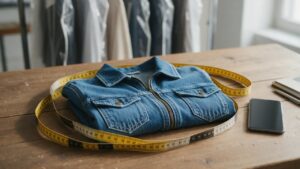
Grab a soft measuring tape and write down your bust, waist, hips, shoulder width, and the length of a top or pants you already love. Keep those numbers in a note on your phone. When you open a listing, compare your numbers to the size chart. Do not skip this step, even if the seller says “true to size.” True to size means nothing without a reference point.
Pay attention to garment measurements, not just body measurements. Some listings include the length and width of the actual clothing item. This is useful. If you have a shirt that fits perfectly, measure it and compare. A two-centimeter difference in shoulder width can change the whole look.
For pants, check the rise, hip width, and inseam. High-waisted pants vary wildly. A 28-inch inseam might be cropped on you or full length depending on your height. If the listing does not include an inseam, ask the seller. Many will respond with measurements if you message them.
When in doubt, size up. It is easier to alter a slightly loose piece than to squeeze into something too small. For stretchy fabrics, you can stick closer to your usual size, but for woven fabrics like cotton poplin or linen, leave a little room.
Keep a record of what works. I have a note that says “Shop A size L fits like a relaxed M” and “Shop B pants size 30 waist is snug.” Those notes save me every time I reorder.
Start Small and Test Before You Commit
It is tempting to build a whole capsule in one checkout. Do not. The first order should be a test run. Pick two or three pieces from your gap list and see how they hold up. Check the fabric, the fit, the color, and how they wash. Only then do you go back for more.
This approach slows you down, which is exactly what you need. Online shopping is fast by design. Flash sales and countdown timers make you feel like you will miss out. But a capsule wardrobe is a long game. One bad bulk order costs more than missing a voucher.
When your test order arrives, try the pieces on with items you already own. Do they fit your formulas? Do they match your palette? If something is off, return it if the shop allows. Shopee has buyer protection features, but the specifics vary by country, seller, and item type. Check the return policy before you buy, especially for overseas orders.
Do not remove tags or wash something until you are sure you will keep it. I have made that mistake with a pair of pants that fit in the mirror but felt wrong after an hour of sitting. Once washed, returns get complicated.
After the test, adjust your notes. Maybe you need a size up in that brand. Maybe the fabric is thinner than expected and you will avoid it next time. Then place your second, slightly bigger order. Building a capsule gradually is more sustainable and less risky than a giant haul.
Accessorize Intentionally, Not Impulsively
Accessories are where online shoppers blow their budget. A cheap necklace here, a cute pair of earrings there, and suddenly your capsule has forty accessories and ten clothing pieces. That is backwards. A small set of accessories can change an outfit, but only if they are chosen with the same care as your clothes.
Pick a metal tone and stick with it most of the time. Gold or silver, not both unless you have a specific mixed-metal look you already wear. For bags, choose one neutral everyday bag and maybe one small bag in an accent color. Shoes follow the same rule: a neutral pair for daily wear and one or two pairs that match your palette.
On Shopee, accessories are often listed with very low prices, which makes them feel harmless. But ten cheap items add up. Look for sellers with detailed photos, especially close-ups of clasps, zippers, and stitching. A bag that looks structured in the photo might arrive floppy and shapeless. Buyer photos help here more than any description.
For shoes, read reviews about sizing carefully. Many online shoe sellers recommend sizing up or down. Look for comments about width, especially if you have wide feet. If a shoe has no reviews, be cautious. Shoes are hard to return and even harder to wear when they pinch.
The goal is not to avoid accessories. It is to make them earn a place. A good belt, a simple watch, and a bag that goes with everything will do more for your capsule than a drawer full of trendy trinkets.
Maintain the Capsule Without Overhauling It Every Season
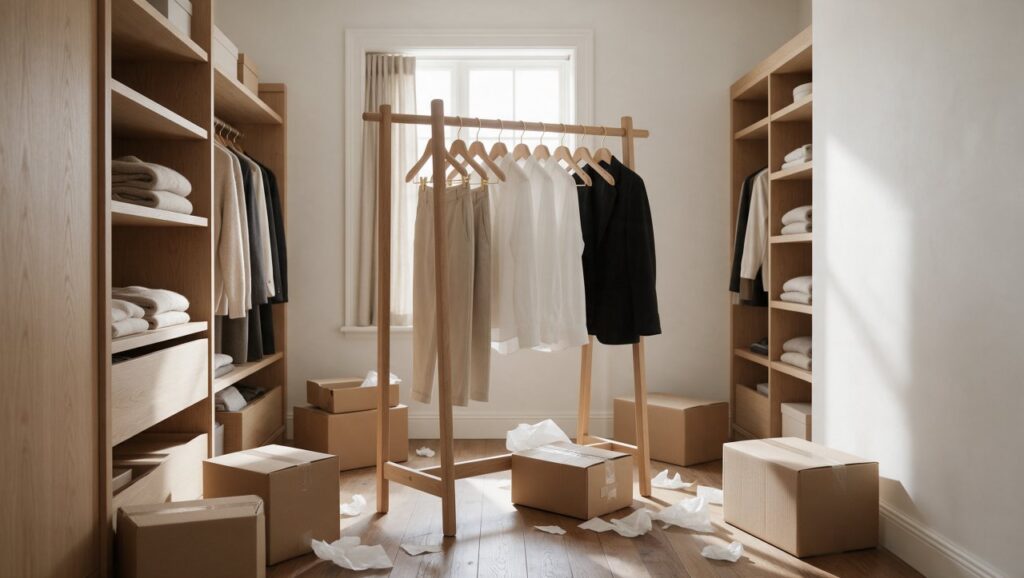
Once your capsule is in place, the real work is keeping it that way. Seasonal changes tempt you to start over, but a good capsule should adjust with small swaps, not a full reset. When the weather shifts, store off-season pieces and fill the gaps. That might mean one warm layer or a pair of closed-toe shoes, not ten new outfits.
Before buying anything new, ask if it replaces something worn out or fills a gap you actually feel. If you did not miss it last season, you probably do not need it this season. That rule has stopped me from buying “just in case” jackets and “what if” dresses.
Shopee makes it easy to save items to your cart and forget them. Use that to your advantage. If you want something, save it and wait a few days. If you still want it after a week and it fits your formulas, consider it. If you forgot about it, let it go. This waiting period kills most impulse buys.
Also do a small audit every few months. Pull out the pieces you have not worn. Ask why. Maybe the fit is off, the color is wrong, or it does not match anything. That information sharpens your next purchase. Over time, you will make fewer mistakes because you will know what works for your real body and real routine.
A capsule wardrobe is not about having less for the sake of less. It is about having enough of the right things. Shopping online makes it easy to drift away from that. Your job is to stay focused, use the tools, and trust your own notes more than the ads.
Your Online Capsule Wardrobe Checklist
Before you hit checkout, run through this list. It keeps the whole process simple and keeps your closet from filling up with regrets.
- Write down three outfits you already love and wear often.
- List the pieces in those outfits as your anchors.
- Choose two or three base colors and two or three accent colors.
- Write three to five outfit formulas for your normal week.
- Identify the gaps between your formulas and your current closet.
- Measure a shirt and pants you already love and save those numbers.
- Search Shopee using specific terms like “olive green linen shorts.”
- Check the fabric composition in the listing description.
- Read buyer reviews for fit, fabric thickness, and color accuracy.
- Compare your measurements to the size chart every time.
- Check the shop rating and return policy before ordering.
- Place a small test order first, not a full haul.
- Try new pieces with existing clothes before removing tags.
- Wait a few days on saved items before deciding to buy.
- Do a mini audit every few months and note what you never wore.
Keep the list on your phone. Use it whenever a sale event is tempting you. The goal is not a perfect closet. It is a closet that makes getting dressed easier, cheaper, and a little more fun.